

Alexander Technique Lessons

Shawn Copeland, certified Alexander Technique Teacher

Dr. Shawn Copeland is a musician, educator, and somatic performance specialist whose work sits at the intersection of artistry, embodiment, and human performance. A clarinetist by training, his career has spanned orchestral, chamber, and solo performance, with appearances alongside ensembles including the North Carolina Symphony and Greensboro Symphony, and a deep commitment to commissioning and performing new music. Over time, his artistic path expanded beyond sound alone, shaped by formative experiences with the Alexander Technique and Body Mapping, as well as a personal journey navigating visual processing challenges and performance-related strain. These encounters led him to a broader understanding of how musicians learn, perceive, and organize themselves in performance.


Copeland is the founder of mBODYed and the creator of the Becoming mBODYed Method, an approach that integrates somatic practice, performance science, and musician wellness to reduce unnecessary tension and support sustainable excellence. As a certified Alexander Technique teacher and published Body Mapping educator, he works with performers and educators across disciplines, helping them reconnect technical mastery with physical awareness and ease. His teaching emphasizes presence, responsiveness, and the lived experience of the body, inviting artists to move beyond effort-driven models toward a more integrated and resilient form of performance.
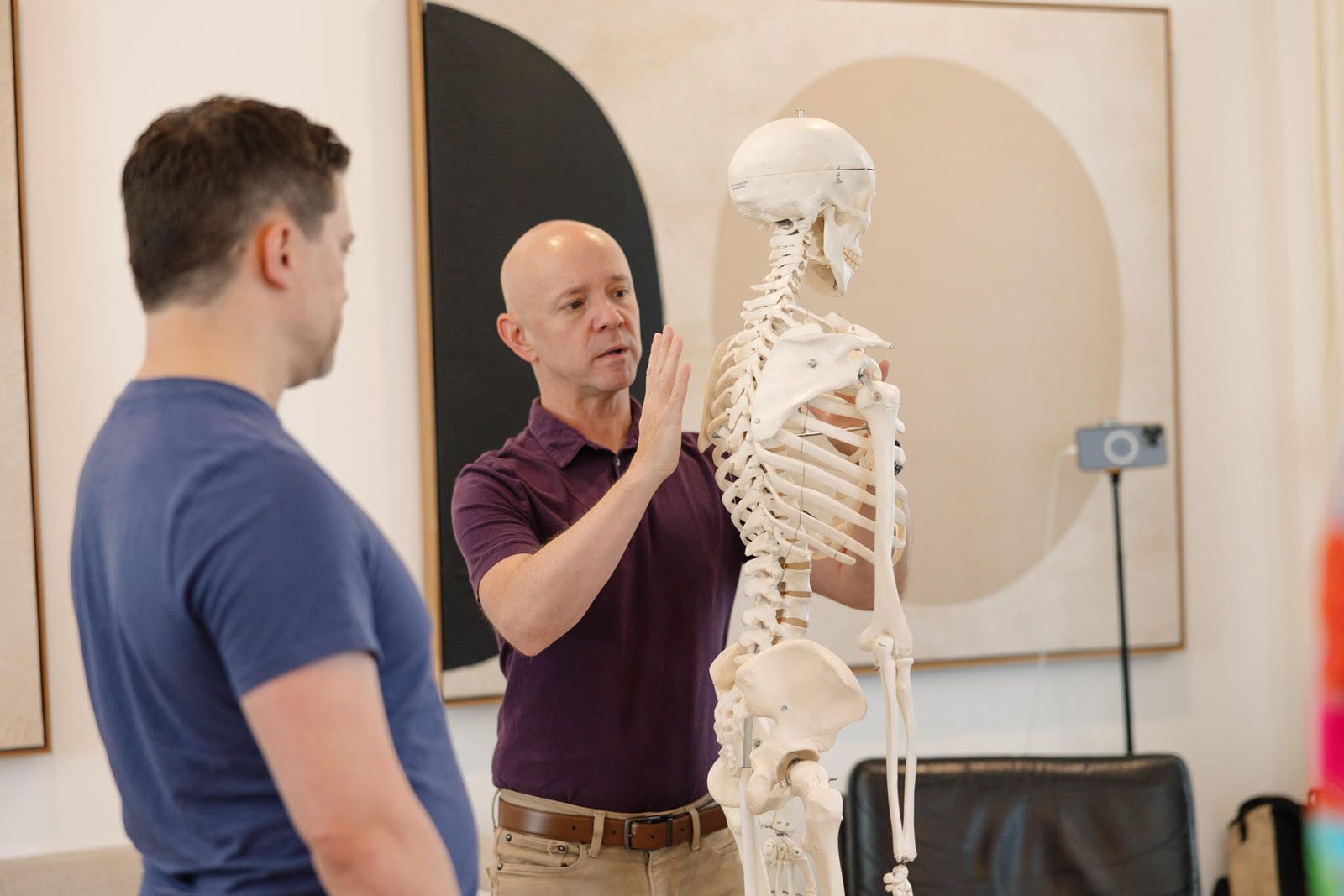

Shawn Copeland explaining body mapping and alexander technique using a skeleton

Body Mapping begins with a simple but often overlooked truth: musicians do not play from an abstract idea of technique. They play from a body that is already organizing itself before the first sound is made. The way we understand the body shapes the way we move, breathe, listen, and respond under pressure. When that understanding is unclear or inaccurate, effort often increases in places it is not needed. Body Mapping helps performers refine their internal picture of the body so movement becomes more coordinated, more efficient, and more available to artistic intention. It is not a replacement for musical discipline. It is a way of allowing discipline to work through a body that is better understood.


The Alexander Technique offers musicians a practical way to notice how habit enters performance. Before a phrase begins, before the breath, before the bow touches the string or the fingers meet the keys, the body has already begun to prepare. Sometimes that preparation supports freedom. Sometimes it narrows possibility through bracing, over-efforting, or anticipation. Through the Alexander Technique, students learn to pause, observe, and choose a more responsive relationship to themselves and their instrument. The result is not less commitment, but more access: to ease, clarity, presence, and the expressive capacity that was already there, waiting for unnecessary effort to release its hold.

If you are interested in Alexander Technique lessons with Dr. Copeland, please click the button below to sign up.

Alexander Technique Lessons